The secret to a perfect slow cooker beef stew is searing high-quality chuck roast in olive oil before simmering it for 8 hours on low with fresh herbs, root vegetables, and a red wine-based broth. This process breaks down connective tissues, resulting in fork-tender meat and a rich, deeply flavored gravy.
The Secret to the Best Beef Stew
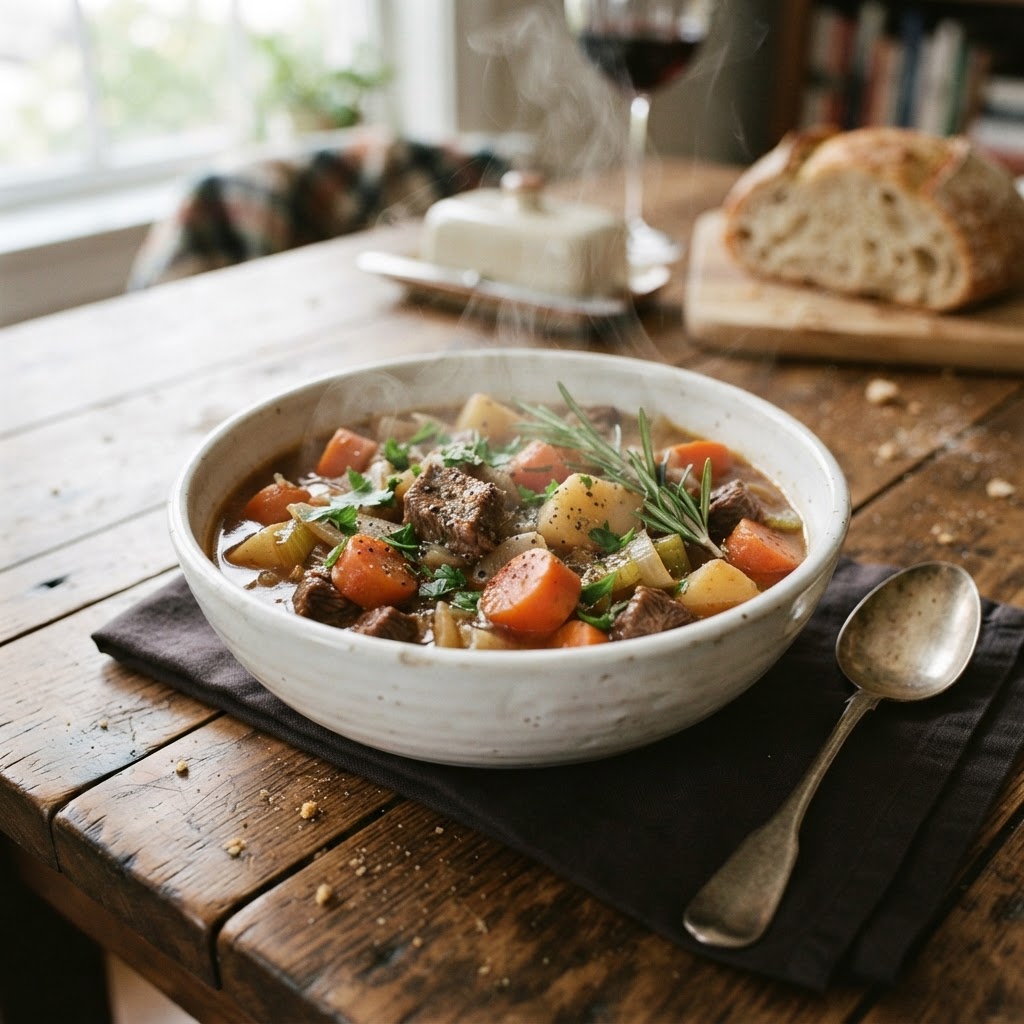
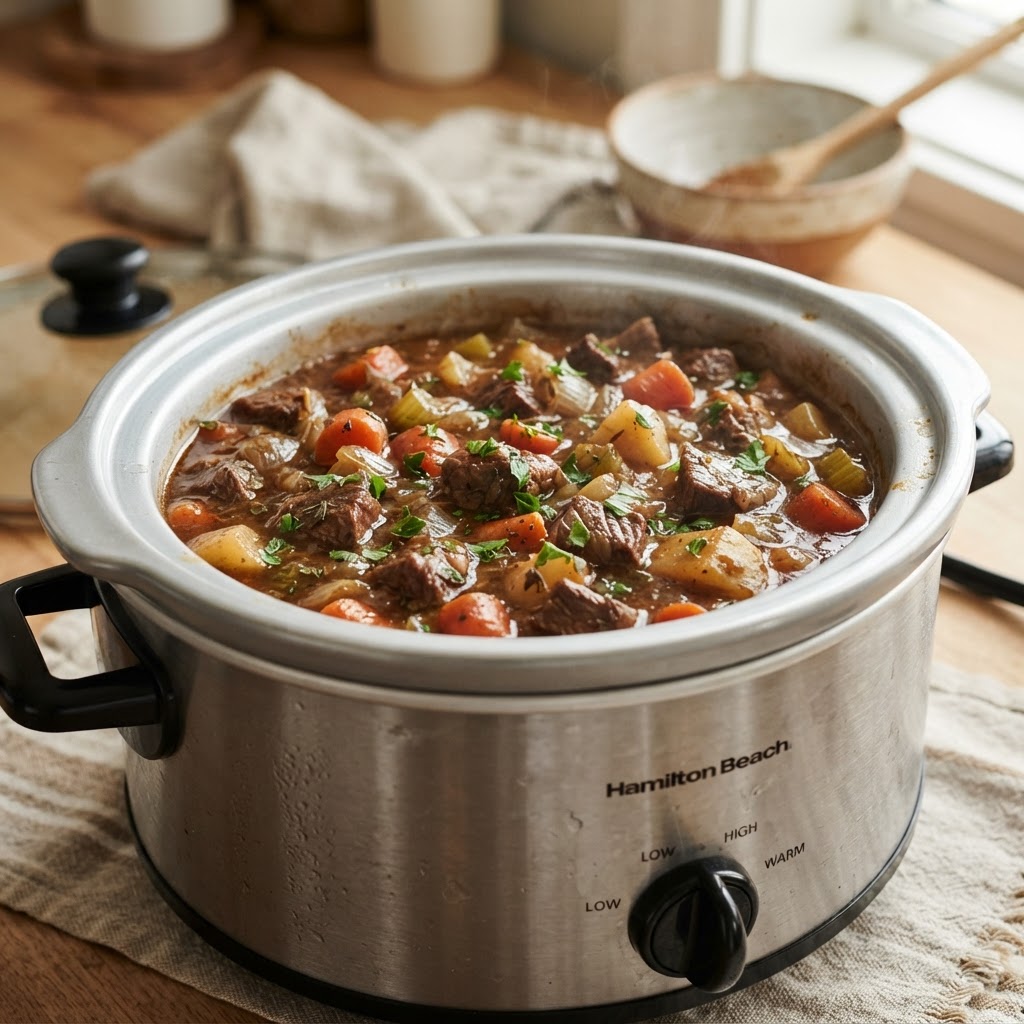
Developing a complex flavor base is achieved by prioritizing the Maillard reaction through aggressive searing of your beef cubes. While many recipes skip this step, browning the exterior of 2 lbs of chuck roast for 8-10 minutes creates a caramelized crust that serves as the foundation for your liquid base. When you combine this browned beef with aromatics like onion and garlic, the slow cooker acts as a gentle pressure vessel, allowing the internal temperature to reach a consistent 190°F (88°C) over 8 hours.
This precise heat management is what distinguishes a restaurant-quality stew from a bland, mushy soup. By waiting to add fresh herbs like rosemary and thyme in the final 30 minutes, you preserve the volatile essential oils that provide a bright, fragrant finish. Utilizing a heavy-bottomed pan for the initial sear is critical, as the residual fond (browned bits) captures the essence of the beef.
This technique ensures that your stew remains a culinary staple, whether prepared in a standard countertop appliance or an enameled cast iron vessel.
Step-by-Step Recipe Instructions
Ingredients You’ll Need
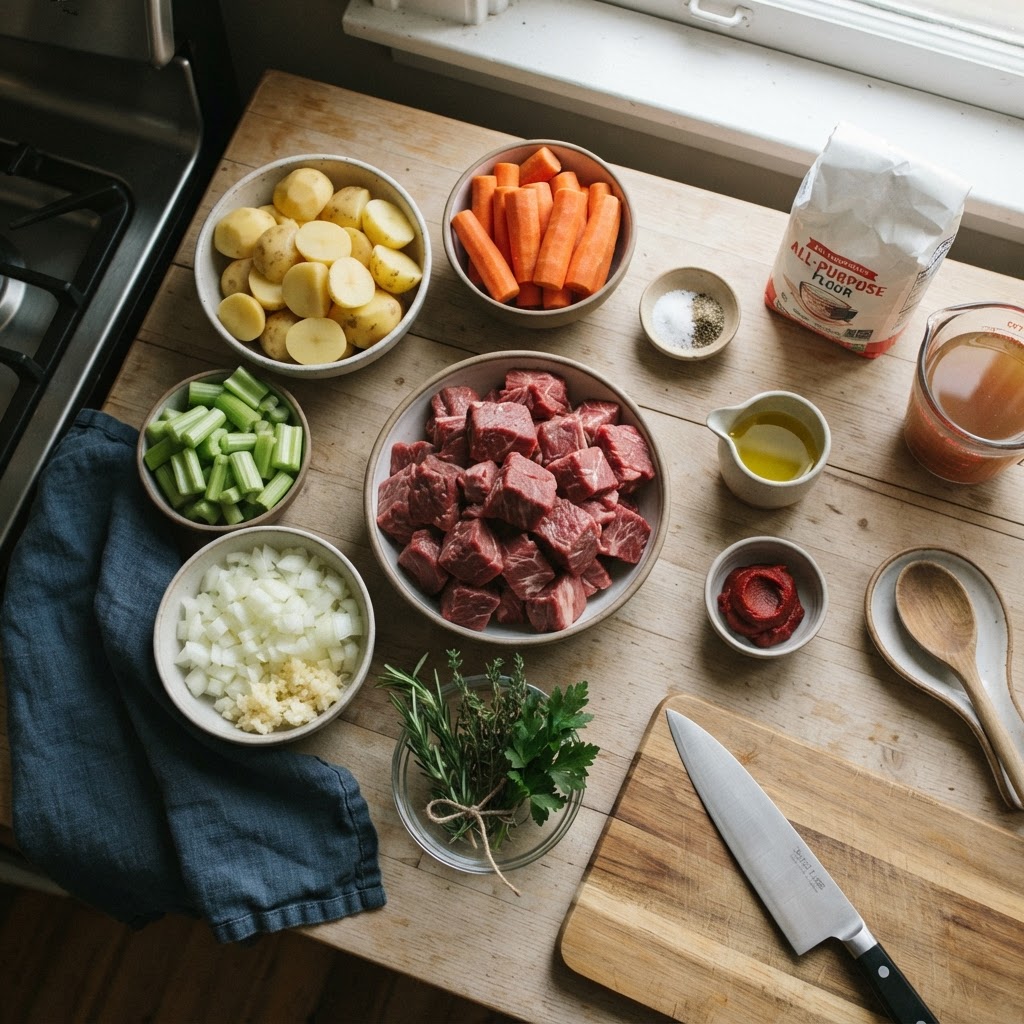
- 2 lbs beef chuck roast, cut into 1-inch cubes
- 3 tbsp all-purpose flour
- 2 tbsp olive oil
- 3 cups beef broth
- 1 cup dry red wine
- 4 large carrots, peeled and sliced into rounds
- 3 stalks celery, chopped
- 1 lb baby gold potatoes, halved
- 1 large yellow onion, diced
- 3 cloves garlic, minced
- 2 tbsp fresh rosemary, finely chopped
- 2 tbsp fresh thyme leaves
Follow this clear, step-by-step guide to prepare this dish perfectly every time.
Essential Ingredients and Preparation
Selecting high-quality stew meat is the most significant factor in achieving a melt-in-your-mouth texture. Beef chuck roast is the gold standard because it contains 15-20% fat and significant collagen, which liquefies at slow temperatures, creating a luxurious mouthfeel. To maintain nutritional integrity and even cooking, ensure all vegetable cuts are approximately 1-inch in size, matching the beef cubes.
Uniformity prevents smaller pieces from dissolving into mush while larger chunks remain raw. For variations like adding peas, incorporate them during the final 30 minutes of the 8-hour cycle to retain their vibrant green color and structural firmness. If you find your broth requires extra body, avoid heavy additives; instead, leverage the natural starches released by the baby gold potatoes or reduce the liquid by 15% before serving.
Always season your dredging flour with kosher salt and cracked black pepper, as this creates a savory barrier that infuses the meat from the outside in. By focusing on these specific technical parameters, you ensure your crockpot beef stew reaches an optimal flavor density without needing processed thickeners.
Cooking Methods and Variations

Adapting traditional beef stew to a slow cooker offers a consistent, low-stress method for managing complex protein breakdown. While traditional stovetop braising requires constant monitoring of the heat to maintain a simmer, a slow cooker provides a stable environment that keeps the liquid between 180°F and 200°F. This steady temperature is ideal for long-cooking cuts that would otherwise become tough at higher, fluctuating heats.
Modern variations allow for significant culinary creativity; for example, substituting dry red wine with a mixture of beef stock and 1 tablespoon of apple cider vinegar provides the necessary acidity to balance the richness. If you are aiming for a lower-carb profile, substituting potatoes with parsnips or turnips maintains the desired viscosity without the heavy starch content. For those looking to increase their caloric density, adding barley during the final two hours adds 3 grams of fiber per half-cup serving while significantly thickening the stew.
The versatility of the slow cooker allows you to swap proteins and vegetables freely, provided you maintain the liquid-to-solid ratio of roughly 1:3 for a thick, stew-like consistency.
Enhancing Your Stew with Unique Additions
Transforming a classic beef stew into a gourmet meal involves incorporating complex textures and contrasting flavor profiles during the final stages of cooking. Adding butternut squash provides a natural sweetness that counters the savory, umami-rich beef stock, while dumplings added during the final 60 minutes act as natural sponges for the gravy. These dumplings, made from a simple flour, baking powder, and milk base, increase the satiety of the meal significantly.
For a more sophisticated flavor profile, consider incorporating wild mushrooms like shiitake or porcini, which provide a savory earthy depth that pairs exceptionally well with the rosemary and thyme notes. If you are preparing for a large gathering, adding pearl barley 90 minutes before the end of the cooking cycle creates a heartier, more substantial dish that stretches the recipe further. Always test for seasoning at the 7-hour mark; the reduced broth can become quite salty, so adjust your sodium levels only after the final reduction.
These unique additions turn a standard family dinner into a layered, complex dish that satisfies both the need for comfort and the desire for culinary elevation.
Troubleshooting Common Stew Problems
Correcting common issues in beef stew requires understanding the balance between moisture reduction and thickener application. If the gravy remains too thin, the most effective solution is a cornstarch slurry, mixed at a 1:1 ratio with water, which thickens instantly at a simmer without altering the flavor. If the beef lacks the desired tenderness, it is likely due to the cooking time being too short or the temperature being too low to break down the collagen.
In this case, adding an additional 60 minutes often resolves the texture issue. Should the stew become too salty, adding a peeled, quartered potato can help absorb the excess sodium; remove the potato before serving. For vegetables that are overcooked or mushy, adjust your loading process by placing heartier root vegetables at the bottom, closer to the heat source, and layering softer ingredients toward the top.
Maintaining a consistent 1-inch cube size for all ingredients prevents the uneven cooking issues that often lead to inconsistent textures in large batches.
FAQ
Can I put raw beef in a slow cooker for stew?
Yes, you can cook raw beef directly in the slow cooker, but it is not recommended for maximum flavor. Searing the meat in a hot skillet for 8-10 minutes beforehand creates a Maillard reaction, which develops deep, savory notes that raw meat cannot replicate during the low-temperature braising process.
How long does beef stew take in a slow cooker?
Beef stew typically requires 6 to 8 hours on the low setting or 3 to 4 hours on high for the best results. Cooking on low is superior because it allows the tough connective tissues in the chuck roast to slowly convert into gelatin, ensuring the meat is tender and succulent.
What can I use to thicken beef stew in a crockpot?
To thicken your stew, you can whisk in a cornstarch slurry—one tablespoon of starch mixed with one tablespoon of cold water—during the final 30 minutes of cooking. Alternatively, mashing a few of the cooked potatoes from the pot into the liquid acts as a natural, gluten-free thickener.
Is it better to cook beef stew on high or low in a slow cooker?
Cooking beef stew on the low setting is highly recommended for the best texture and flavor. Low heat ensures a gentle cooking environment that prevents the exterior of the beef cubes from becoming tough or stringy, allowing the interior fat and collagen to render perfectly over the 8-hour period.
Can I add frozen vegetables to my slow cooker beef stew?
Yes, you can use frozen vegetables, but they must be added during the final 30 to 60 minutes of the cooking cycle. Adding them too early will cause them to break down completely and become mushy, compromising the texture and visual appeal of your final dish.